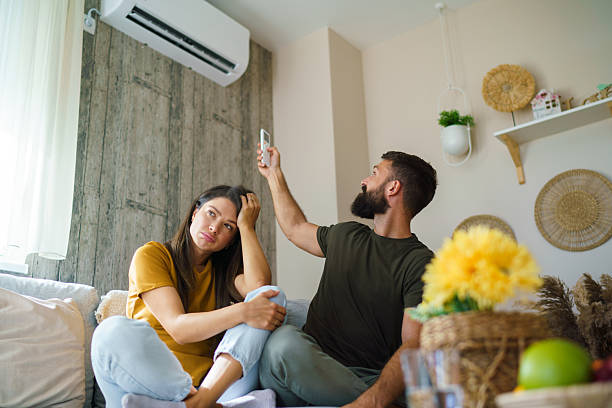
There’s a special kind of frustration that comes with flicking on your aircon on a scorching day, only to feel a lukewarm puff of air instead of that beautiful blast of cold. You check the remote, scratch your head, and wonder what’s gone wrong.
If your air conditioning unit is not blowing cold air, don’t panic. Most of the time, the culprit is something simple you can diagnose yourself in a few minutes. Here are the seven most common causes, in the order you should check them.
1. The Thermostat Is On The Wrong Setting
Before you assume the worst, check the remote. It sounds obvious, but it’s the number one cause of “faults” that turn out to be nothing at all.
Firstly, make sure the unit is set to COOL mode. Look for the snowflake icon, not the sun or the fan symbol. If it’s on FAN mode, the unit is only circulating existing room air, not actually cooling it. If it’s somehow on HEAT, well, that explains everything.
Secondly, check the temperature. The set point needs to be lower than the current room temperature. Start with 18–20°C to confirm the system kicks into cooling mode. Once it’s working, you can set it back to a comfortable 24°C.
Also, make sure the fan is set to AUTO, not ON. On the ON setting, the indoor fan runs constantly, blowing unconditioned air even when the compressor isn’t cooling.
DIY Check:
Set the unit to COOL, set the temperature to 18°C, and set the fan to HIGH. Wait 10–15 minutes for cooling to stabilise.
2. Clogged Air Filters
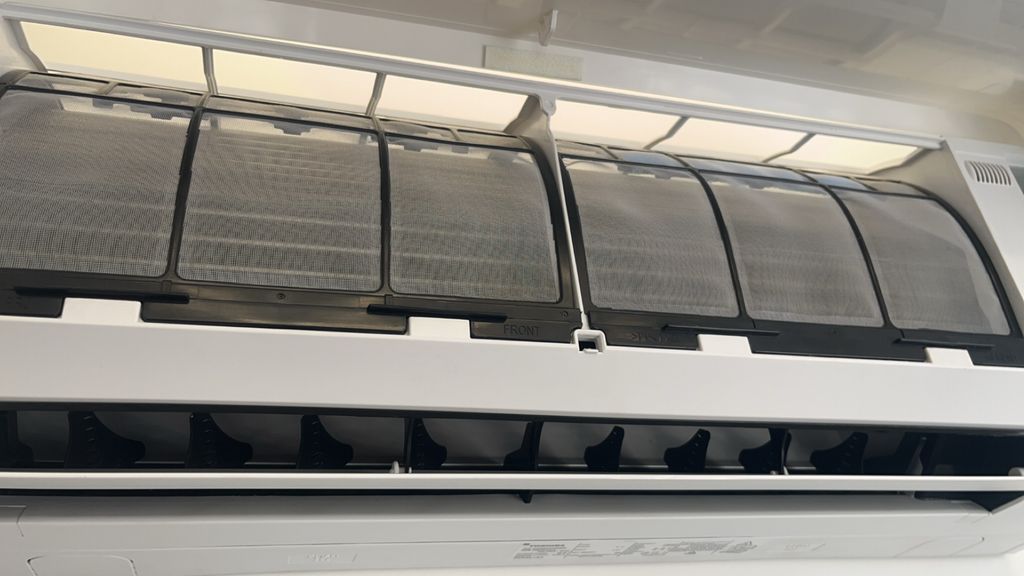
If your settings are correct, check the filter next. A clogged filter is the single most common cause of poor cooling performance across all brands and system types.
Here’s why it matters. The filter catches dust, pollen and pet hair before it reaches the evaporator coil. When it’s packed with debris, airflow drops. Less air passes over the cold coil, so it absorbs less heat. The system works harder, cools less, and your energy bills climb.
Worse still, restricted airflow can cause the evaporator coil to freeze over. When that happens, the coil can’t absorb heat, and you’re left with warm air blowing from the vents.
DIY Check:
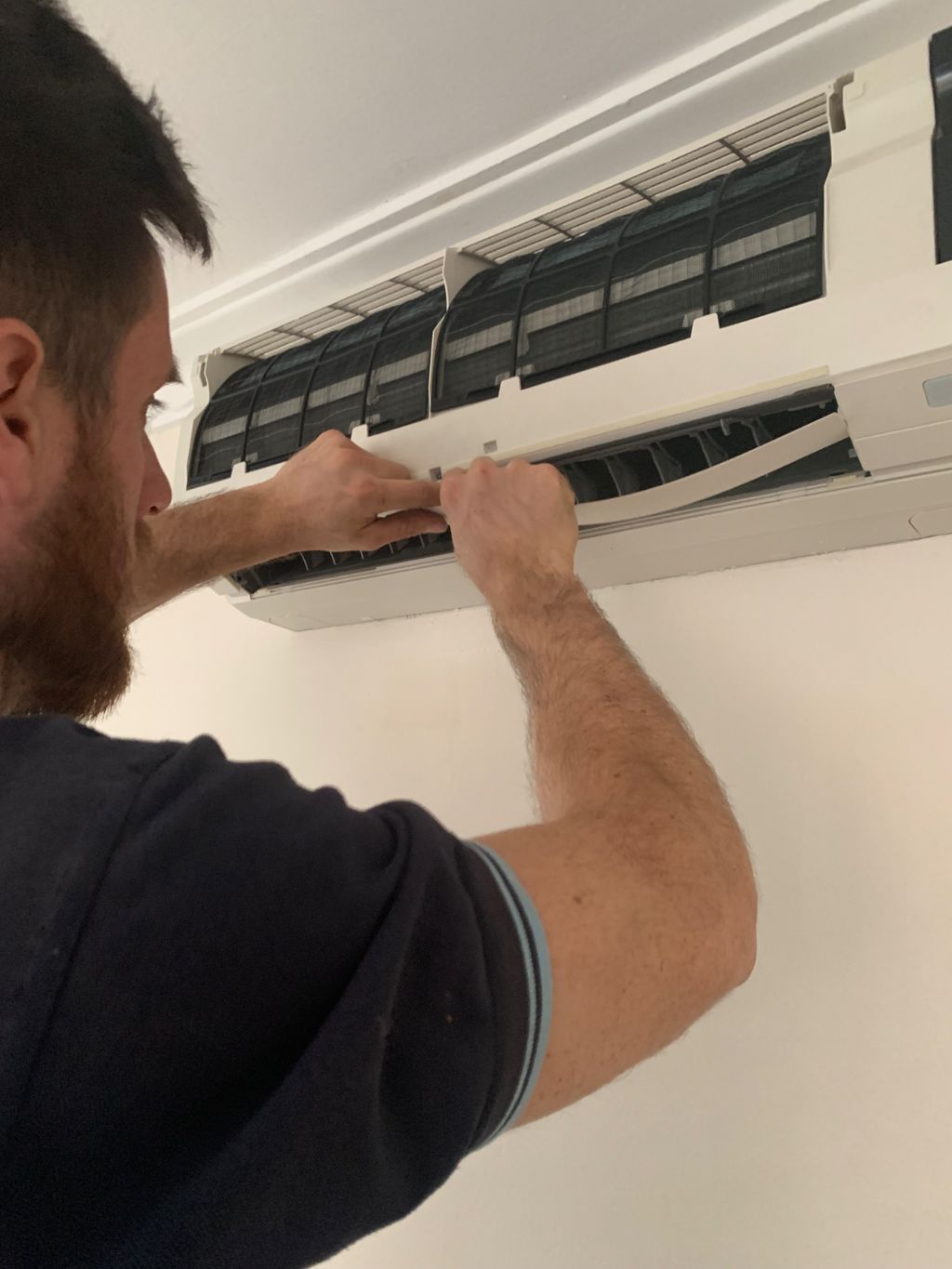
Pop open the front panel of your indoor unit and slide out the filters. If they’re grey and coated in dust, vacuum them or rinse them with warm, soapy water. Make sure they’re completely dry before putting them back. With heavy use, clean filters every month or two.
3. The Outdoor Unit Is Choked or Blocked
The large box outside your house is the condenser. It releases the heat it collects from inside your home. If it can’t exchange air freely, it can’t cool.
Leaves, grass clippings, dirt, spider webs and overgrown shrubs all restrict airflow around the condenser coils. When that happens, the system runs constantly but never achieves the cold temperatures you want. It’s like trying to cool down a hot engine with a blocked radiator.
DIY Check:
Go outside and check the unit. Clear any debris around it, and keep plants at least two feet away from the sides. Never use a pressure washer on the coils as it’ll bend the delicate fins and ruin the unit.
4. A Clogged Condensate Drain Line
As your air conditioner cools, it pulls moisture from the air. That condensation drips into a drain pan and flows out through a drain line. Over time, dust, mould and debris can block that line.
When the drain line clogs, water backs up in the pan. Many modern units have a safety switch that automatically shuts down the indoor unit when the water level rises too high. If your aircon keeps shutting itself off, a blocked drain could be the reason.
DIY Check:
If you can access the end of the drain line, check for visible blockages. If water is pooling around the indoor unit or you see standing water in the pan, call a professional. This can cause water damage if left too long.
5. A Frozen Evaporator Coil
This one sounds backwards: how can ice stop your aircon from cooling? But a frozen evaporator coil is a common cause of warm air.
The coil freezes when airflow is restricted, usually because of a dirty filter, blocked vents or a failing fan. Once the coil is iced over, it can’t absorb heat from your indoor air. The system runs, but the air comes out warm.
DIY Check:
Turn the system off completely and let it thaw. Check for ice on the indoor coil behind the filters or on the outdoor pipework. Once thawed, replace the filter and check that all your vents are open and unobstructed. If it freezes again, there’s an underlying issue, likely low refrigerant, that needs a technician.
6. Low Refrigerant (A Leak, Not Just a Top-Up)
Refrigerant is what absorbs heat from your home and releases it outside. Your system doesn’t “use up” refrigerant; it circulates in a sealed loop. If it’s low, that means there’s a leak somewhere.
Signs of a refrigerant leak include poor cooling, ice buildup on the coil or refrigerant lines, and a hissing sound near the unit. You might also notice the system running longer than usual or struggling to keep up during the hottest part of the day.
Important: Adding refrigerant without fixing the leak wastes money. The system will lose it again. According to Energy Safe Victoria, only a licensed technician needs to locate the leak, repair it, and then recharge the system to the correct level. This isn’t a DIY job; refrigerant handling is dangerous and legally restricted.
7. A Failing Compressor or Electrical Fault
The compressor is the heart of your air conditioning system. It pumps refrigerant through the loop, and if it fails, cooling stops entirely. You might hear the outdoor unit humming but not kicking into gear, or you might hear nothing at all.
Similarly, a tripped circuit breaker or blown fuse can cut power to the system. Air conditioners draw a lot of electricity, and on scorching days, the breaker can trip due to overload.
DIY Check:
Check your switchboard to see if the circuit breaker for your aircon has tripped. If it has, flip it back on. If it immediately trips again, stop. That indicates a serious electrical fault that needs a licensed electrician or air conditioning technician.
When to Call a Professional
If you’ve worked through all seven checks and your air conditioning unit still isn’t blowing cold air, it’s time to call an expert. The remaining causes including refrigerant leaks, compressor faults, electrical issues, or a failing control board, all require specialised tools, training and licensing.
DIY repairs on these components can be dangerous, and they can also void your warranty. A licensed technician will confirm the fault, provide a quote, and get your system cooling properly again.
At Surrey Air, we’ve helped thousands of Victorian households stay cool through summer. If your aircon isn’t performing, give us a call; we’ll diagnose the issue honestly and get it sorted before the next heatwave hits.
The Bottom Line
Most cooling problems have simple causes. Check your thermostat settings. Clean your filters. Clear the outdoor unit. If those don’t fix it, a blocked drain, frozen coil, low refrigerant or electrical fault is likely to blame.
The sooner you diagnose the problem, the sooner you can get back to enjoying that cold blast of air. And if you’re not sure, don’t guess; call a professional. Your comfort and your energy bill will thank you.